Prebuilt PC vs Custom Build: What You Actually Get
At first glance, most modern gaming PCs look the same: powerful CPU, RTX-class GPU, RGB lighting, liquid cooling, and a clean glass-panel case. Whether it’s a prebuilt system or something sold as a “custom build,” the expectation is simple — high performance and reliability.
In reality, what you get often depends less on the parts and more on how the system was designed, assembled, and validated.
Where Most Prebuilt Systems Come From
Prebuilt PCs are typically assembled in high volume. The goal is efficiency, cost control, and visual appeal — not engineering precision.
- Parts are selected to meet a price target
- Assembly is done quickly, often on a production line
- Validation is minimal — usually just enough to boot
On paper, the specs look strong. In practice, compromises are everywhere: airflow is not optimized, cooling is undersized, and component balance is often overlooked.
In many cases, the motherboard — one of the most critical components for stability — is chosen based on price rather than capability.
Marketplace “Custom Builds”
Systems sold as “custom gaming PCs” on marketplaces are a different category — but the problems are often the same.
These builds are usually designed to look impressive rather than perform consistently.
- RGB-heavy configurations with minimal thermal planning
- 120mm liquid coolers used as a visual upgrade
- Little to no real stress testing or tuning
The system powers on, lights up, and gets sold. What happens under sustained load is rarely part of the process.
What Actually Goes Wrong
Across prebuilts and low-quality custom builds, the same patterns appear again and again:
- Incorrect airflow direction or poorly planned case cooling
- Undersized or inefficient CPU cooling solutions
- Motherboards not fully secured or mechanically stressed
- Heavy GPUs installed without proper support
- Memory configurations that are never validated under load
Individually, these may seem like small issues. Together, they create unstable systems that overheat, throttle, and behave inconsistently.
This is how you end up with a system that looks like a $2000 build but performs like something much cheaper.
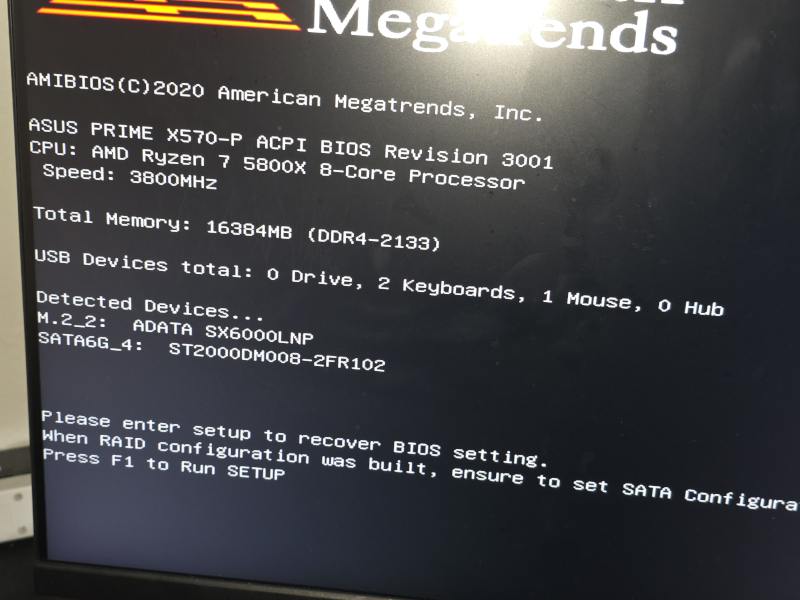 $2000 class system running like entry-level hardware — stable only with a single RAM module at base DDR4-2133, failing under dual-channel configuration.
Performance Loss and Instability
When cooling and assembly are done incorrectly, the system cannot sustain its intended performance.
Thermal throttling reduces CPU speed under load, meaning expensive processors never reach their full potential. In real-world terms, a high-end CPU can behave much closer to a mid-range one — especially in sustained workloads or gaming sessions.
At the same time, instability starts to show — the kind of problems we regularly diagnose during computer repair visits in Boca Raton:
- game crashes and random freezes
- inconsistent frame times and stuttering
- unexpected reboots or blue screens
These are not rare edge cases — they are common outcomes of systems that were assembled without proper engineering and validation.
Assembly vs Engineering
There is a fundamental difference between assembling a PC and engineering a system.
Assembly means putting parts together until the system turns on. Engineering means understanding airflow, thermal limits, mechanical stress, power delivery, and how all components interact under real workloads.
Without that, even expensive hardware can become unreliable and underperforming.
What a Proper Build Actually Involves
A properly built system is not defined by its parts list alone. It requires:
- balanced component selection
- correct airflow design
- appropriate cooling for the actual thermal load
- secure mechanical installation
- real validation under load, not just a successful boot
This is where most prebuilts and rushed custom builds fall short.
Why It Matters
A system that runs hot, unstable, or below expected performance is not just inconvenient. Over time, excessive heat and poor mechanical conditions can accelerate component wear and reduce the lifespan of the system.
In other words, bad assembly doesn’t just affect performance — it affects longevity.
The Sfixy Approach
At Sfixy, the focus is not on assembling parts quickly, but on building systems that behave predictably and reliably under real-world conditions.
This approach comes from decades of engineering experience — going back to the early days of PC hardware, when CPU frequencies were set manually with jumpers and stability depended entirely on understanding the system.
That same mindset applies today:
- every system is built with airflow and thermals in mind
- components are selected for compatibility and stability, not just specs
- systems are validated under load, not just powered on
The goal is simple: a system that delivers the performance you paid for — and continues to do so reliably over time.
If you’re considering a new system or dealing with one that doesn’t perform the way it should, you can request a custom PC build in Boca Raton and nearby areas.