Why High-End PC Builds Don’t Always Behave as Expected
I regularly see high-end builds that don’t behave the way they should.
The Case
Recently, I came across a system with what looked like a top-tier configuration:
- AMD X3D processor
- RTX 5080 (in this case, two units were involved — one turned out to be defective)
- High-end DDR5 memory
On paper, this is exactly what most people would consider a “no-compromise” build. In reality, the system struggled to boot properly and showed instability — especially when running memory in dual-channel mode.
The Reality of Modern High-End Builds
Modern high-performance systems are incredibly powerful — but also more sensitive to configuration details than many expect. This is especially noticeable when working with:
- DDR5 memory
- High-core-count CPUs
- Multi-module configurations
None of these are problems on their own — but together, they require much more careful setup than older platforms did.
The DDR5 Factor
DDR5 brings significant performance improvements, but also introduces new complexity.
Even in fully compatible configurations, it’s not unusual to encounter:
- Long boot times due to memory training
- Difficulty starting in dual-channel or with multiple modules
- Instability under load
- Inconsistent POST behavior
On AMD platforms, memory behavior can be slightly more sensitive to configuration — particularly with higher capacities or aggressive profiles. At this level, you’re not just assembling a PC — you’re working within tight stability margins.
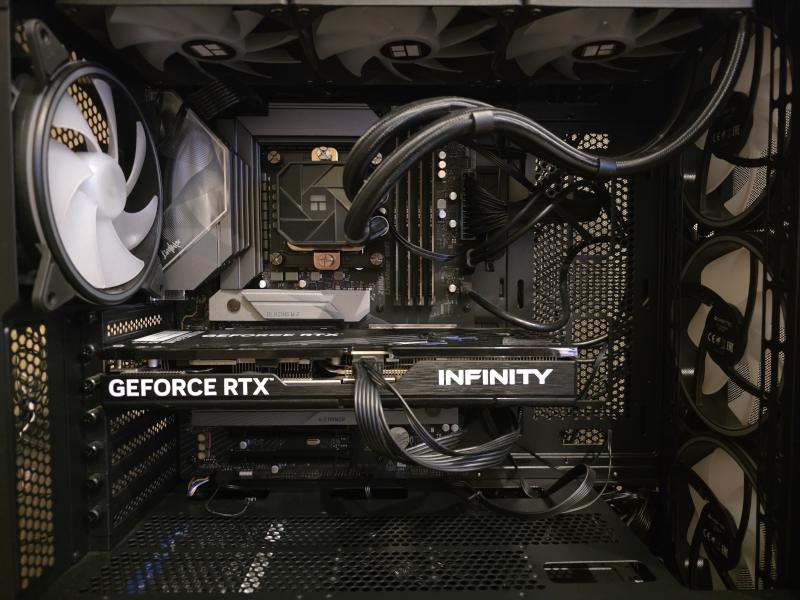 This workstation uses four DDR5 modules - a configuration that looks straightforward but often requires manual tuning to achieve stability, especially on high-performance platforms.
Compatibility Still Matters
A common assumption is simple: if the parts are high-end and physically compatible, the system will just work.
In practice, things are more nuanced. Motherboard QVL (memory compatibility lists) still play an important role, and even validated kits may require adjustment depending on the setup.
Pushing capacity, for example by using four modules, or mixing configurations can further reduce stability margins. In some cases, achieving a stable system requires manual tuning of:
- Memory timings
- Voltages
- BIOS settings
Expensive Parts Don’t Mean Easy Setup
When building a high-performance gaming system or a workstation for video, 3D, or engineering workloads, people typically go for configurations like:
- Top-tier CPUs
- High-end GPUs
- Large amounts of fast DDR5 memory
- Premium motherboards and power supplies
This is absolutely the right direction — but it also increases system complexity. Higher performance comes with tighter tolerances, and small configuration details start to matter much more.
The Hidden Cost of DIY High-End Builds
Without proper validation, even a very expensive system can run into:
- Instability or inconsistent behavior
- Components that appear faulty but are actually misconfigured
- Unnecessary returns and replacements
- Hours of trial-and-error tuning
This is where many builds fall short — not because of bad parts, but because the system wasn’t fully dialed in.
The Takeaway
High-end systems are not difficult because the hardware is bad — quite the opposite. They’re challenging because they push the limits of performance, and that requires proper configuration. A stable system is not just assembled — it’s validated.
If you’re dealing with unstable behavior in a high-end system, you may also want to read why expensive PC builds fail due to poor assembly and cooling mistakes.
Need Help With a High-End Build?
If you’re planning a new system or struggling with stability, I also provide custom PC build services in Boca Raton — including proper component selection, assembly, and full system validation.
I help diagnose and stabilize high-performance systems in Boca Raton and nearby areas — with proper testing and without guesswork. You can request a service and we’ll go from there.